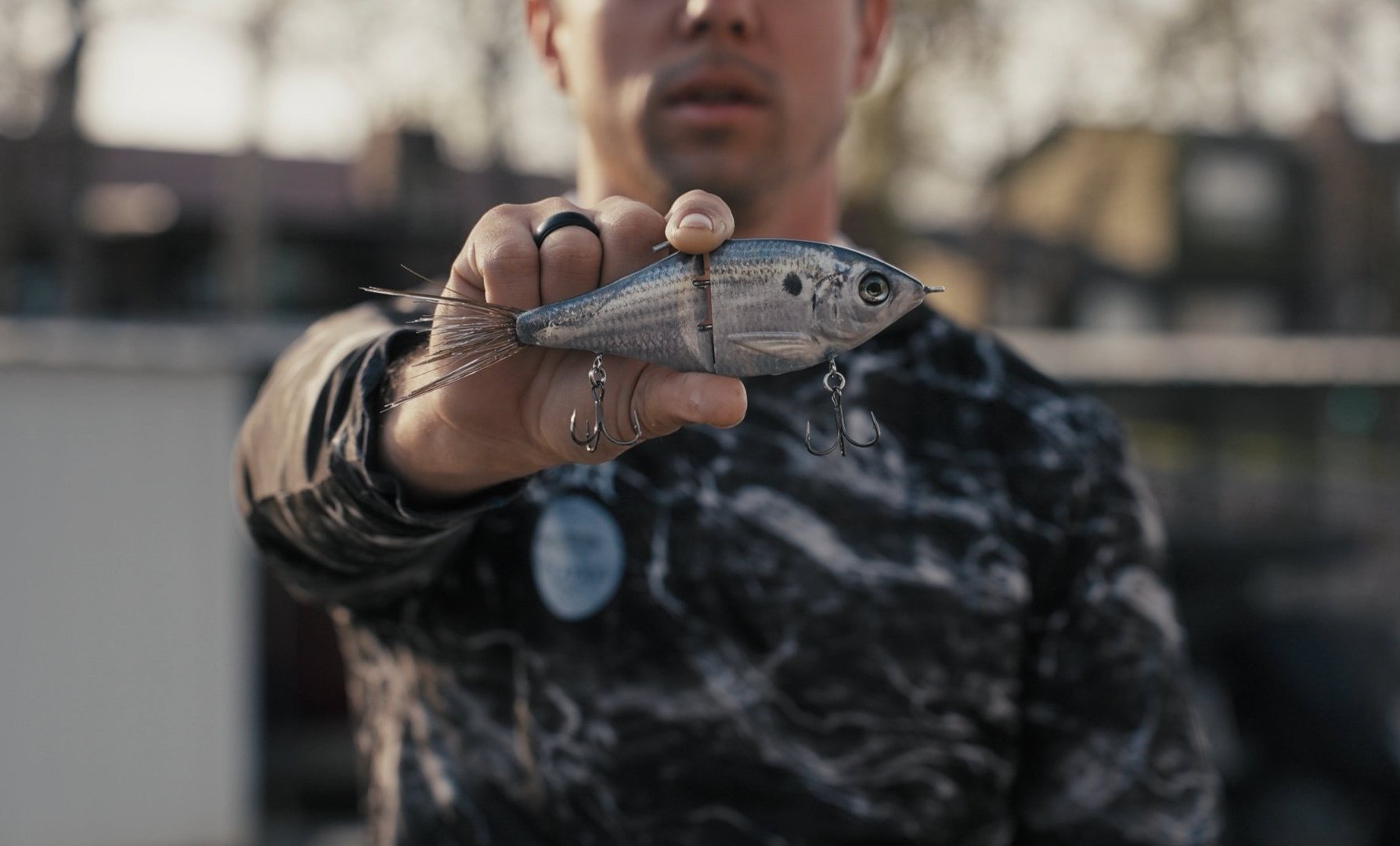
A lot of anglers put the glides away when the water cools down. That's a mistake. Big fish still have to eat, and a big, easy meal is exactly what they're looking for when they don't want to chase all day. Fall and winter can be the best time of year to catch your personal best on a glide.
Fall: follow the bait
As the water cools, shad and other baitfish move into the backs of creeks and pockets, and the bass follow them. Fish are feeding up for winter and can be aggressive.
- Cover water. Fish the creeks, pockets, and flats where you see bait activity.
- Speed it up when fish are active. Chop-and-glide and faster retrieves trigger reaction bites.
- Watch for schooling fish and bait balls. A glide thrown into the middle of busting fish often gets the biggest one in the group.
Winter: slow down and go deeper
When the water gets cold, fish slow down and usually pull deeper, but the big ones still feed.
- Fish it slower. A slow, steady crawl with long pauses is often all it takes.
- Get down to them. A moderate/fast-sink glide helps you reach deeper fish. Count it down and keep it near their level.
- Let it hover. Long pauses are deadly in cold water. Many bites come the moment the bait stops.
- Target deep structure near shallow water: bluff ends, channel swings, steep points, and deep docks.
- Pick your days. A few warm, sunny afternoons in a row can push fish up and get them feeding.
Expect follows
Cold-water fish often follow and look before they eat. Stay patient: kill the bait, give it a twitch, and keep it in the water at the boat. One committed bite in the winter can be the fish of the year.
Stay safe
Cold water is dangerous. Wear your life jacket, dress in layers, and let someone know where you're fishing.
Bundle up, tie on a glide, and go hunt a giant while everyone else is home waiting for spring.
Questions & Comments
No comments yet. Be the first to ask a question.